
Go back to the section in the chapter on the problems with the CPI. How serious are they? Why does it matter if we get the CPI wrong?
Here is some information on who is surveyed:
Coverage
- The CPI represents changes in prices of all goods and services purchased for consumption by urban households. User fees (such as water and sewer service) and sales and excise taxes paid by the consumer are also included. Income taxes and investment items (like stocks, bonds, and life insurance) are not included.
- The CPI-U includes expenditures by urban wage earners and clerical workers, professional, managerial, and technical workers, the self-employed, short-term workers, the unemployed, retirees and others not in the labor force. The CPI-W includes only expenditures by those in hourly wage earning or clerical jobs.
https://www.bls.gov/cpi/overview.htm (Links to an external site.)
Most of you live in rural areas. Is the inflation rate you face different than that of urban areas? Why or why not?
From the same website:
Uses
- As an economic indicator. As the most widely used measure of inflation, the CPI is an indicator of the effectiveness of government policy. In addition, business executives, labor leaders and other private citizens use the index as a guide in making economic decisions.
- As a deflator of other economic series. The CPI and its components are used to adjust other economic series for price change and to translate these series into inflation-free dollars.
- As a means for adjusting income payments. Over 2 million workers are covered by collective bargaining agreements which tie wages to the CPI. The index affects the income of almost 80 million people as a result of statutory action: 47.8 million Social Security beneficiaries, about 4.1 million military and Federal Civil Service retirees and survivors, and about 22.4 million food stamp recipients. Changes in the CPI also affect the cost of lunches for the 26.7 million children who eat lunch at school. Some private firms and individuals use the CPI to keep rents, royalties, alimony payments and child support payments in line with changing prices. Since 1985, the CPI has been used to adjust the Federal income tax structure to prevent inflation-induced increases in taxes.
Are all of those uses appropriate? Is the accuracy of the CPI more important for some uses than for others?
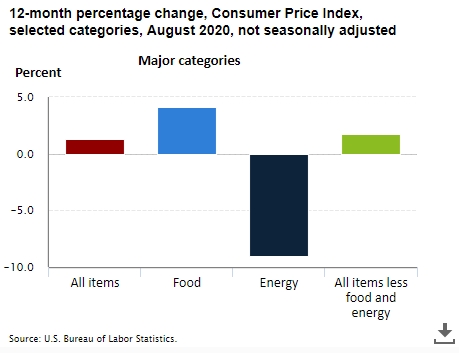
CPI is a general gauge of the cost of living. I think overall it’s a really good estimate to use when speaking on general terms. It puts guidelines to the process of determining how much incomes must rise to maintain a standard of living. Overall market forces will move consumers from an ‘overpriced’ item to a more reasonable one. CPI should consider this in a better way. Also, innovation will change people’s buying and consuming habits and hopefully be making people’s standard of living better. CPI should reflect the decrease in the new cost of living. CPI as an estimate or north star on our journey is a good idea. But you really need to understand the details to get a better picture of lives being directly affected by CPI. Take our local Eagle County, Colorado CPI. We pay more for gas, food, water, shopping, healthcare, sporting goods, etc here in Eagle County then they do down in Denver. We also have a large population of vacationers and second home owners. Most of which have a higher income (more dispensable income) than the average local. They are setup to weather higher CPI costs than the locals unless wages also increase. But if our CPI data is tied to the state, or even country to determine wage increases, this seems like a flaw in our logic. We really need to look at CPI for our local community and make decisions based off of that data.
I think using CPI to adjust social security, pension, food stamps, etc is a good use of the data to make economic decisions. What other data points should we consider to adjust these services? Should we consider that retires and the elderly on social security have different spending habits and use a different benchmark? Here is a good article discussing that idea of using CPI-E instead…
Overall, I think using CPI data is a good idea. As long as everyone understands the limitations and flaws in it’s data.
 Dude.World