In many large cities you can now use your cell phone to call Uber or Lyft instead of hailing a taxi. Would you expect this to affect the prices of taxi medallions (that is really the supply of taxis)? Why or why not? Talk about supply and demand curves in your answer.
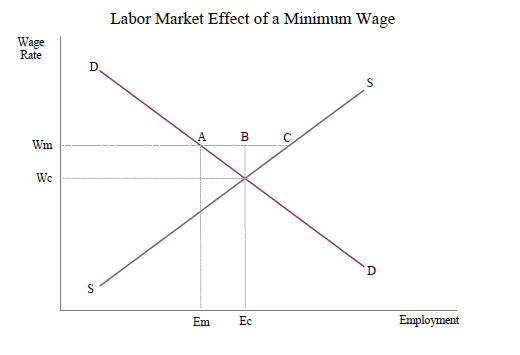
Minimum wage is another classic example. What happens to the quantity demanded of labor when the minimum wage is increased? How about the quantity supplied of labor?
I would expect the price of taxi medallions to drop significantly due to Uber and Lyft entering a region. The supply of available drivers to move people would rise and shift the supply curve to the right which would increase the quantity, and lower the equilibrium price. With a lower price I would think that some taxi drivers wouldn’t be able to make a good living and would move on to another industry. The medallions would start to go for sale as people wanted to get out and prices would come down.
According to a story on NYDailyNews.com in July 2013, NYC Yellow cabs made 445,000 trips per day, this was prior to Uber and Lyft entering the market. Fast forward 5 years and they were down to under 300,000 trips per day in 2018. Uber and Lyft combined for 490,000 trips per day. The price of the medallions dropped 30-40%.
Is it worth it for NYC Taxi drivers to hold a medallion any more? What about the ones that switched from paid taxi over to Uber/Lyft driving? I wonder if they would have adapted and been able to make more or less money in this new line of work. Essentially doing the same job but putting their labor toward the new employers. I think a lot of it would depend on the markup they used to be paid by the taxi company they worked for, total cost of car and medallion vs. now using a personal vehicle and taking the Uber/Lyft markup off the rides they do. Here is an interesting take from a driver that did switch.
https://www.quora.com/Why-dont-taxi-drivers-just-become-Uber-Lyft-drivers
With regards to minimum wage the quantity demanded would go down when the minimum wage increased. The quantity of labor supplied should go up, which means higher unemployment numbers.
When businesses are in a free market they get to negotiate the cost of labor with employees and the market should move fairly as it has healthy competition.
The demand for workers at the lowest level would drop if a minimum wage was raised too high. Businesses wouldn’t be able to afford too many workers at that high labor cost. Businesses that would have to take on those added costs would then pass those higher costs on to the consumers via their prices on products and services. Young people wanting to take on college could be influenced by ‘easier’ minimum wage labor and distract them from pursuing a college education.
 Dude.World